
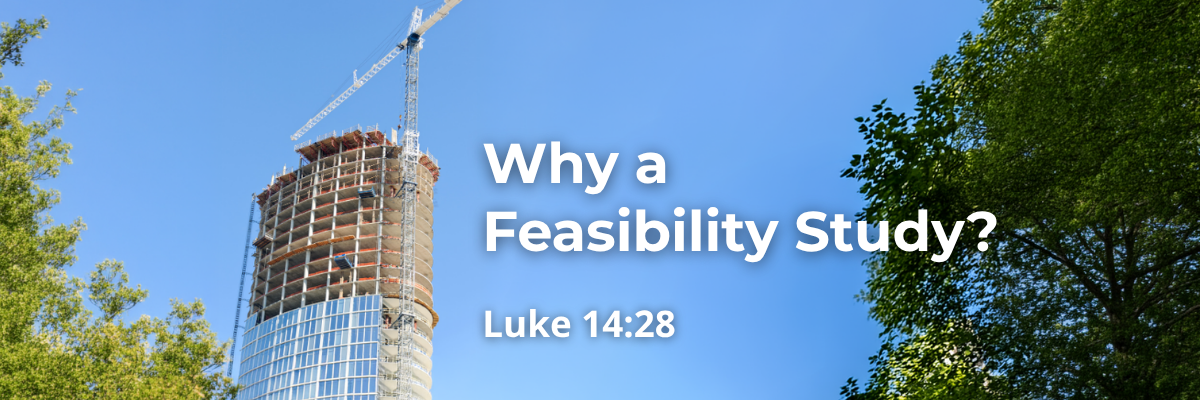
Jesus had no patience for half-built towers. In Luke 14, he makes it plain: before you build, sit down and count the cost. Starting well is not enough. You must know what it will take to finish before you ever break ground.
Bill leads a social service ministry and wanted to launch a housing initiative. He believed his message was compelling and skipped the feasibility study. He announced the campaign at his gala assuming donors would jump in. They didn’t and his campaign stalled.
When a ministry feels the stirring to launch a capital campaign, the natural impulse is to move fast. The need is real. The vision is compelling. The board is excited. So why slow down? Because a feasibility study will reveal four things you cannot afford to move forward without knowing.
Readiness. Is your organization healthy enough to run a campaign right now? Your donors are already asking whether your leadership, staff, and board are capable of carrying this through, even if they have never said it out loud. A feasibility study is not a sign of weak faith, it is wise stewardship.
Clarity. Do your donors understand and believe in the vision? A feasibility study forces you to write down your specific plans. It tests your assumptions by giving your best donors the chance to speak honestly before they are ever asked to give. You learn what resonates, what concerns them, and whether your goal is too low, too high, or right on target.
Relationships. Your top ten donors will make or break your campaign. If they are behind your project, you will reach your goal. If they are reluctant, your project is in jeopardy. A feasibility study also surfaces who those donors know, opening doors to new relationships that can strengthen the campaign.
Money. Launching a campaign without knowing your donors’ capacity and conviction is like building on sand. The feasibility study asks donors directly whether they support the project and what they might consider giving. That intelligence does not just tell you if the goal is reachable. It tells you how to ask, who to ask first, and what will move them to say yes. Campaigns that skip this step launch with fanfare and quietly fall short, leaving donors skeptical and leaders discouraged.
The feasibility study tells you whether you have enough of all four to proceed, and if not, what needs to be strengthened first.
Bill wishes he had slowed down. You don’t have to make the same mistake.
Think About This: Jesus said the man who starts a tower without counting the cost will be mocked when he cannot finish it. The feasibility study is how you avoid that outcome. It is how you honor your donors, protect your organization, and steward the vision God has given you.
Response: Father, give us the wisdom to count the cost before we build, the courage to ask hard questions, and the faith to trust what you reveal. May every campaign we launch bring glory to you and blessing to those we serve.