
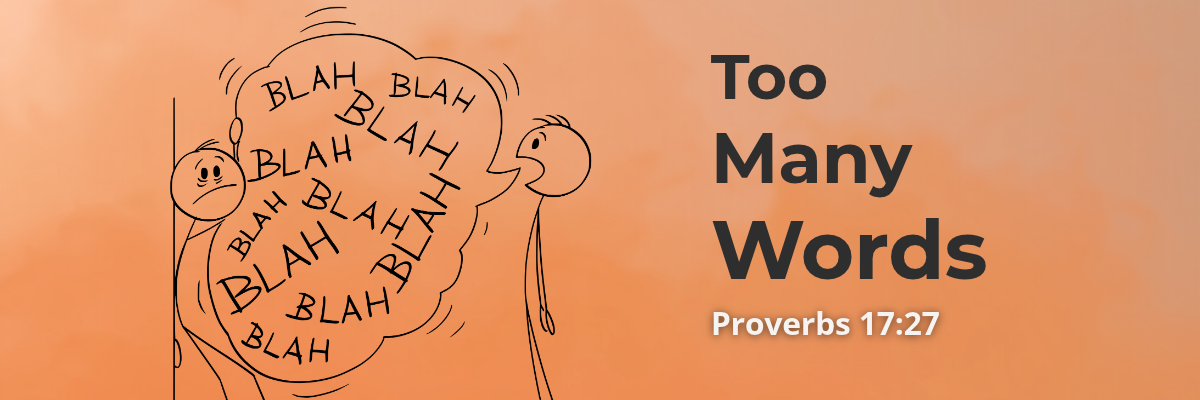

In Disney’s Bolt, the hero dog tries to send a threat through two alley cats. The message is simple in his head. Out loud it goes on and on, until one cat admits he stopped listening halfway through. The warning Bolt cared about most landed with nobody.
Do you use too many words?
Your Emails
Count the words in your last donor email. Then cross out every sentence the donor wouldn’t miss. Most of us write like we’re worried the reader won’t get it unless we say it four different ways.
Here’s a sentence you see in thank-you emails all the time: “We wanted to take a moment to reach out and express our heartfelt gratitude for your generous and faithful support of our ministry over this past year.” That’s 27 words. Try this: “Thank you. Your gift kept the pantry open all year.” Ten words, and only the second one tells the donor what happened.
Donors skim when we give them a reason to. A few words chosen with care do more work than a pile of extra ones.
Your Texts
Texts get read in seconds, usually standing in a hallway or waiting on coffee. If your text needs three paragraphs, write a letter. “Hi Linda, I just wanted to let you know the board met last night and there were some exciting developments I’d love to share whenever you have a minute” can be “Linda, the board approved the new wing. Coffee Thursday?” Say the one thing that matters and save the rest for the phone call.
Your Appeal Letters
Appeal letters are where we’re most tempted. We’re afraid one story or one ask won’t be enough to move someone, so we add another story, then three statistics, then a second ask. By page two it reads like a year-end report. A donor doesn’t need every reason you have. Pick the truest one and tell it well. One mom, one kid, and one Tuesday night at the shelter will outpull a page of outcomes.
Your Visits
This is where talking too much costs you the most, because it costs you trust. We keep talking because more information feels like more persuasion. Meanwhile the donor pulls back without knowing why. People can tell when they’re being worked on, and when they feel that pressure, they close up.
So ask more questions and give fewer answers. Let the donor describe the problem in their own words and tell you what success would look like if this gift made the difference they hope for. When they’re talking, they’re persuading themselves. If there’s a pause, leave it alone. The donor is usually thinking, and what they say next is often the most important thing you’ll hear. When you keep talking past that point, you’re in their way.
Think About This: Where are you saying more than the moment needs? What question could replace a paragraph this week?
Response: Lord, give me the restraint to speak only what’s needed and the patience to let silence do its work. Teach me to trust that You can move a donor’s heart faster than my words ever could. Amen.