
0
0
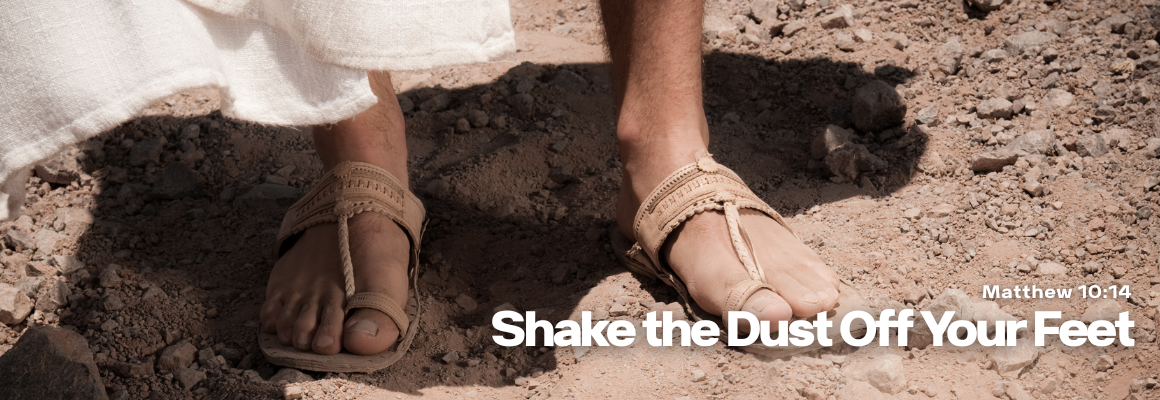
Close-up of two people wearing sandals walking on a dry, dusty path with the title Shake the Dust Off Your Feet displayed at the bottom.
Fundraising Verse of the Week

Shake the Dust Off Your Feet

โ€œIf anyone will not welcome you or listen to your words, leave that home or town and shake the dust off your feetโ€ (Matt. 10:14).

Jesus commissioned the Twelve as the first missionaries to proclaim the message of the Kingdom to the lost sheep of Israel. Their assignment was to โ€œheal the sick, raise the dead, cleanse those who have leprosy, and drive out demonsโ€ (Matt. 10:8). We donโ€™t have the apostolic power to physically raise the dead, but your ministry is changing lives for eternity because the power of the Gospel breaks chains setting people free from their sin. We can learn four important fundraising principles from Jesusโ€™ instructions to his disciples as we identify, cultivate, and solicit donors to partner with us.

Search
How were his disciples supposed to find these generous patrons? Jesus commanded his disciples not to take any money with them for their journey but to seek out โ€œsome worthy personโ€ in whatever town or village they entered. They were learning to trust God to meet their every need. God provides through his people because โ€œthe worker is worth his keepโ€ (Matt. 10:10). Jesus told them not to go to the Gentiles or to the Samaritans. As you search for major donors, focus first on people of faith whose worldview aligns with yours.

Stay
When the disciples found a worthy person, they were to stay in their house until they left the town (see Matt. 10:11). Some fundraisers apply this literally and stay with their major donors. When your donor offers hospitality, itโ€™s a wonderful relationship-building opportunity. The fundraising principle is this: the best way to cultivate major donors is face to face in their homes. It takes time to build trust and develop lasting friendships.

Share
The disciples preached the redemption message to everyone who would listen. As they entered their hostโ€™s home, they shared a greeting and peace (see Matt. 10:11-12). Jesus had taught them many things, so they had many lessons to share and many stories of the wonderful works he had done. โ€œFreely as you have received, freely giveโ€ (Matt. 10:8). You have many transformational stories to share with your prospective donors. Tell them of the all the wonderful things God is doing in the lives of those you are serving.

Shake
If someone wouldnโ€™t welcome a disciple or listen to their words, Jesus instructed them to โ€œleave that home or town and shake the dust off your feetโ€ (Matt. 10:14). We hate to give up on a donor, but if they havenโ€™t responded after youโ€™ve made repeated efforts to share your story, perhaps itโ€™s time to move them to the inactive file and focus on those who are interested. Itโ€™s not your job to convince someone to give to your ministry, itโ€™s only your job to share the message and ask for a gift. The Holy Spirit will prompt those he wants to supply your needs.

Think About This: Jesus sent out his disciples with nothing, but he provided everything they needed through people he had prepared to receive their message. God will provide everything your ministry needs to accomplish his purposes.

Response: Lord, please give me faith to trust you for donors who will meet our needs.

Hands holding a red heart against a pink background with the text "Effective Donor Follow-up" and "2 Corinthians 9:3".
Fundraising Verse of the Week

Effective Donor Follow-Up

โ€œBut I am sending the brothers in order that our boasting about you in this matter should not prove hollow, but that you may be ready, as I said you would be.โ€ (2 Corinthians 9:3)

What do you say to donors who pledge but never give? Perhaps the most difficult concept Paul addresses in 2 Corinthians 8โ€“9 is accountability. Paul had approached the Corinthian church the year before about giving to the believers in Jerusalem who were suffering from persecution and poverty. The church immediately responded with a gift and enthuยญsiastically promised more. Paul was so pleased with their initial generosity he shared their story everywhere he went. Many other churches were motivated to give because of the Corinthiansโ€™ leadership pledge but they never got around to sending their gift. This was unacceptable to Paul. He was counting on their gift, the church in Jerusalem was counting on their gift, and now the churches in Macedonia who gave because of their example were paying attention. Paul writes to prompt the Corinthians to keep their promise.

Action or Inaction
The Corinthiansโ€™ good intentions didnโ€™t translate into actions. If your donor doesnโ€™t follow through, should you just forget the pledge? Paul sent a pledge reminder letter to follow up, but then he sent the brothers to check on their gift. John taught, โ€œlet us not love with words or speech but with actions and in truthโ€ (1 John 3:18). Your donorโ€™s inaction toward you speaks of their character. Your actions to hold your donor accountable demonstrate your love toward them.

Pride or Embarrassment
Paul had told everyone about the Corinthiansโ€™ generosity. Paul was proud of their initial leadership, (2 Cor. 8:24), but their reputation and his reputation were in jeopardy if they reneged on their pledge. Now was the time to finish what they started (2 Cor. 8:11). How often you follow-up with these donors is up to you, but itโ€™s important to stay on top of these ministry partners in a kind and caring way.

Urgent or Optional
Two times Paul mentions he was sending the brothers. He was so urgent because he had already counted their gift. Help your donors realize your ministryโ€™s key initiatives wonโ€™t happen if they donโ€™t follow through with their promise. When you visit them, be respectful, empathetic, and sensitive to the fact that life happens, occasionally causing donors to fall behind on their commitments.

Obedience or Disobedience
Donโ€™t focus on the negative. Focus on the positive things which will be accomplished when your ministry partner is able to fulfill their pledge. Remind your donors of the people who will be changed for eternity because of their generosity. โ€œOthers will praise God for the obedience that accompanies your confession of the gospel of Christ, and for your generosity in sharing with themโ€ (2 Cor. 9:13).

Think About This: Paul emphasized we should give generously and cheerfully, not grudgingly, reluctantly, or under compulsion. This means Titus and the brothers did not twist anyoneโ€™s arms, but they did share Paulโ€™s message face to face. Perhaps the brothersโ€™ very presence made the difference.

Response: Father, please give me the words to say as I visit our ministry partners who are behind on their pledge.

Fundraising Verse of the Week

Opinionated Major Donors

But Naaman went away angry and said, โ€œI thought that he would surely come out to me and stand and call on the name of the Lord his God, wave his hand over the spot and cure me of my leprosy.โ€ (2 Kings 5:11)

As commander of the army of the King of Aram, Naaman was a proud man and by human standards he had every reason to be. โ€œHe was a great man in the sight of his master and highly-regardedโ€ (2 Kings 5:1). He was rich, famous, and accustomed to telling people what to do. Only one thing held him backโ€”he had leprosy. A servant girl he had captured told his wife Elisha would heal him. So, he made a pilgrimage to see the prophet.

When Naamanโ€™s entourage arrived. Elisha didnโ€™t even come to the door but sent his servant to instruct Naaman to go wash in the Jordan seven times and be healed. Naaman stomped off in a huff and told his servant Elisha should have at least come out to meet him, pray to his God, wave his hands over the leprosy, and cure him. He was convinced he knew more than Elisha about how to heal his leprosy.

Major Opinion
Naamanโ€™s attitude toward Elishaโ€™s instructions is like some major donors who think you are doing ministry all wrong. No doubt youโ€™ve listened patiently to someone who doesnโ€™t understand why you did or did not do something a certain way. You should be eager to listen, learn, and respond, but donโ€™t change something just because a wealthy donor says you should. Stay on mission.

Major Change
A courageous servant spoke truth and changed Naamanโ€™s mind. He went to the Jordon, washed seven times, and was healed physically and spiritually. It may not happen often but occasionally a major donor who has opposed you, may come to their senses, see things differently, and apologize. (see 2 Tim. 2:24-26).

Major Gift
Naaman rushed back to Elisha and offered him extravagant gifts of gold, silver, and clothing. But Elisha did something most ministry leaders would never considerโ€”he refused his gifts. In contrast to false teachers who use religion for financial gain, Elisha wanted Naaman to understand the free gift of salvation. Are you more concerned about a gift or your prospective donorโ€™s spiritual health?

Major Lesson
Naaman asked permission to take some dirt home so he could sacrifice burnt offerings to the Lord. Then he asked if God would forgive him for accompanying his king to the pagan temple as part of his job. Elisha granted both requests told him to go in peace. Elisha showed grace and kindness to this new believer because he knew spiritual growth takes time.

Think About This: Some donors may be tempted to influence your decisions by wielding their checkbooks. Itโ€™s easier to refuse a gift when it comes with strings that might pull you off mission. Donโ€™t sacrifice your core values for a short-term gain. Stand for biblical truth. God will bring you like-minded partners who will appreciate your courage.

Response: Father, please help me care more about my donorโ€™s relationship to you than anything else. Please give me discernment to know when I should refuse a gift.


Ron Haas has served the Lord as a pastor, the vice president of advancement of a Bible college, a Christian foundation director, a board member and a fundraising consultant. Heโ€™s authored three books: Ask for a Fish โ€“ Bold Faith-Based Fundraising, Simply Share โ€“ Bold, Grace-Based Giving, and Keep on Asking โ€“ Bold, Spirit-Led Fundraising. He regularly presents fundraising

Fundraising

Use Fundraising AI (Without Losing the Personal Touch)

Let’s talk about how to make AI your friend in ministry fundraising. Hereโ€™s some practical tips to help you connect with your donors while saving time.

First Things First: AI Is Your Writing Buddy

Think of AI as your enthusiastic assistant who’s read every fundraising book out there but needs your guidance on the heart and soul of your ministry. It’s great at making your writing shine, but you’re still the one leading with God’s vision.

Super Practical AI Prompts You Can Use Today

For Your Next Fundraising Letter

Try this prompt:

Write a warm fundraising letter for our Christian food bank ministry. Include:

  • A story about Sarah, a single mom we helped last month with groceries and prayer
  • Reference Matthew 25:35 naturally in the text
  • Mention that $50 feeds a family for a week
  • End with a clear but gentle ask

Tone: Compassionate and hopeful

Length: About 400 words

For Monthly Donor Thank Yous

Here’s a winning prompt:

Write a thank you email to our monthly donors who give $30/month to support our youth ministry. Include:

How their faithful giving helped us take 50 teens to summer camp

  • A quick story about one teen who got baptized
  • Make it feel personal but not overly emotional
  • Keep it short and sweet (150 words)
  • Write like you’re sending a grateful note to a friend

For Impact Updates

Try this approach:

  • Create a ministry impact update for our email newsletter. Include:
  • 3 bullet points of what we did this month (served 200 meals, held 4 Bible studies, helped 15 families with rent)
  • A short praise report about answered prayer
  • A specific prayer request for next month
  • Bible verse that fits naturally

Style: Casual and joyful

Quick Tips to Keep It Real

Do This โœ…

  • Feed AI specific details about your ministry’s personality
  • Give it real stories and numbers to work with
  • Let it help with the writing structure, but you add the heart
  • Use it to create different versions for different donor groups (first-timers vs. long-time supporters)

Skip This โŒ

  • Avoid using AI for one-on-one donor conversations
  • Don’t use language just because it sounds “spiritual”
  • Skip the corporate-speak (nobody wants to read about “optimizing donor engagement”)

Making AI Work Better for You

  1. Keep It Personal Instead of: “Write a fundraising letter” Try: “Write a fundraising letter like you’re telling a friend about our ministry’s biggest need right now”
  2. Add Your Flavor Give AI examples of words and phrases you actually use in your ministry. If you say “family” tell AI that!
  3. Real Stories Work Best Feed AI specific stories:

Quick Fixes When AI Gets Too Formal

If AI writes: “We humbly request your generous contribution to facilitate our ongoing ministry initiatives…”

Ask it to rewrite like this: “Write that again like you’re talking to a friend over coffee.โ€

Remember This!

  • AI is great at organizing your thoughts and making writing flow
  • BUT you know your ministry and your people best
  • When in doubt, make it sound more like a conversation and less formal.
  • Keep stories real and specific
  • Let your ministry’s personality shine through

The bottom line? AI is like having a super-helpful volunteer who’s great with words but needs your guidance on the heart of your ministry. Use it to save time on writing so you can spend more time actually ministering to people!


Ron Haas has served the Lord as a pastor, the vice president of advancement of a Bible college, a Christian foundation director, a board member and a fundraising consultant. Heโ€™s authored three books: Ask for a Fish โ€“ Bold Faith-Based Fundraising, Simply Share โ€“ Bold, Grace-Based Giving, and Keep on Asking โ€“ Bold, Spirit-Led Fundraising. He regularly presents fundraising workshops at ministry conferences and has written fundraising articles for  Christian Leadership Allianceโ€™s Outcomes magazine.

Major Donors, Donation Approach, Donor Relations

Bottom of the Ninth: How One College Pulled the Ultimate Comeback!

Baseball fans live for those magical moments – bottom of the 9th, down by a few runs, bases empty, and somehow your team strings together a rally that brings the crowd to their feet! Every pitch matters. Every at-bat could make or break the game. One swing could be the difference between celebration and heartbreak.

We just witnessed one of these clutch performances with one of our Christian College clients. Picture this: I get an email from the president that reads like a manager’s nightmare scenario: “Pat, great gameplan, but here’s the situation – we need $2.4-$2.8 million in 120 days, including scholarship commitments. Season ends June 30th.”

“Hold up, Coach,” I replied. “Are you telling me if we don’t hit this number out of the park, the board might have to shut down the program next semester?”

His response? A simple “YEP!”

At TTG, we’ve got a saying that would make any baseball player proud: “Pray like it’s all up to God… hustle like you’re running out an infield single.” Just like you need both talent AND practice to win games, James teaches us that faith without works is dead. This wasn’t about building a fancy new stadium – this was about keeping the team on the field. And just like fans rally behind a team fighting for playoff survival, donors respond to that kind of urgency.

I laid out our lineup card to the president: “You’re our cleanup hitter here. You need to be in the field with me, making contact with donors!” He didn’t hesitate – “Put me in, coach!” He signed off on every play in our strategy, and we started our ninth-inning rally.

Our Gameplan:

  • Scout our “Top 10/Next 20” heavy hitters, plus a farm system of 50 promising prospects
  • Craft custom pitches for each potential donor with specific ask amounts
  • Get face time with donors – no pitching via mail (That’s like trying to win a game with only bunts – 1-5% success rate vs. 80-85% when you swing for the fences in person)
  • Build an all-star team of board members, faculty, and staff who could help us connect with donors
  • Draft a power-hitting Chief Development Officer who could drive in major gifts

Just like the World Series trophy isn’t won by one player, this became a true team effort. The president even installed countdown clocks around campus for the final 30-day stretch – like having the scoreboard lighting up those final crucial innings.

And guess what? WALK-OFF GRAND SLAM! We didn’t just hit our target of $2.4-2.8 million – we crushed it with $3.2 million! Plus, we added not one but TWO stewardship officers and a development dream team. It was like watching a rookie hit a game-winning homer in Game 7 of the World Series – a miracle I’ve been blessed to witness with clients worldwide since I stepped up to the fundraising plate in 1981.

Want to stage your own comeback? You’ll need a clear gameplan, specific targets, a committed roster from the board to the bullpen, a president who’s ready to step up to the plate, and that World Series-level intensity. If you’re down late in the game here in 2024, let us help you draw up the perfect rally strategy!


About the Author: Pat McLaughlin;

President/Founder โ€“ Pat started The Timothy Group in 1990 to serve Christian ministries as they raise money to advance their missions. TTG has assisted more 2,100 Christian organizations around the world with capital, annual, and endowment campaigns. More than 25,000 of Patโ€™s books, Major Donor Game Plan, The C Factor: The Common Cure for your Capital Campaign Conundrums, and Haggai & Friends have helped fundraisers understand the art and science of major donor engagement. Pat makes more than one hundred major donor visits annually and provides counsel to multiple capital campaigns.

Cart Overview